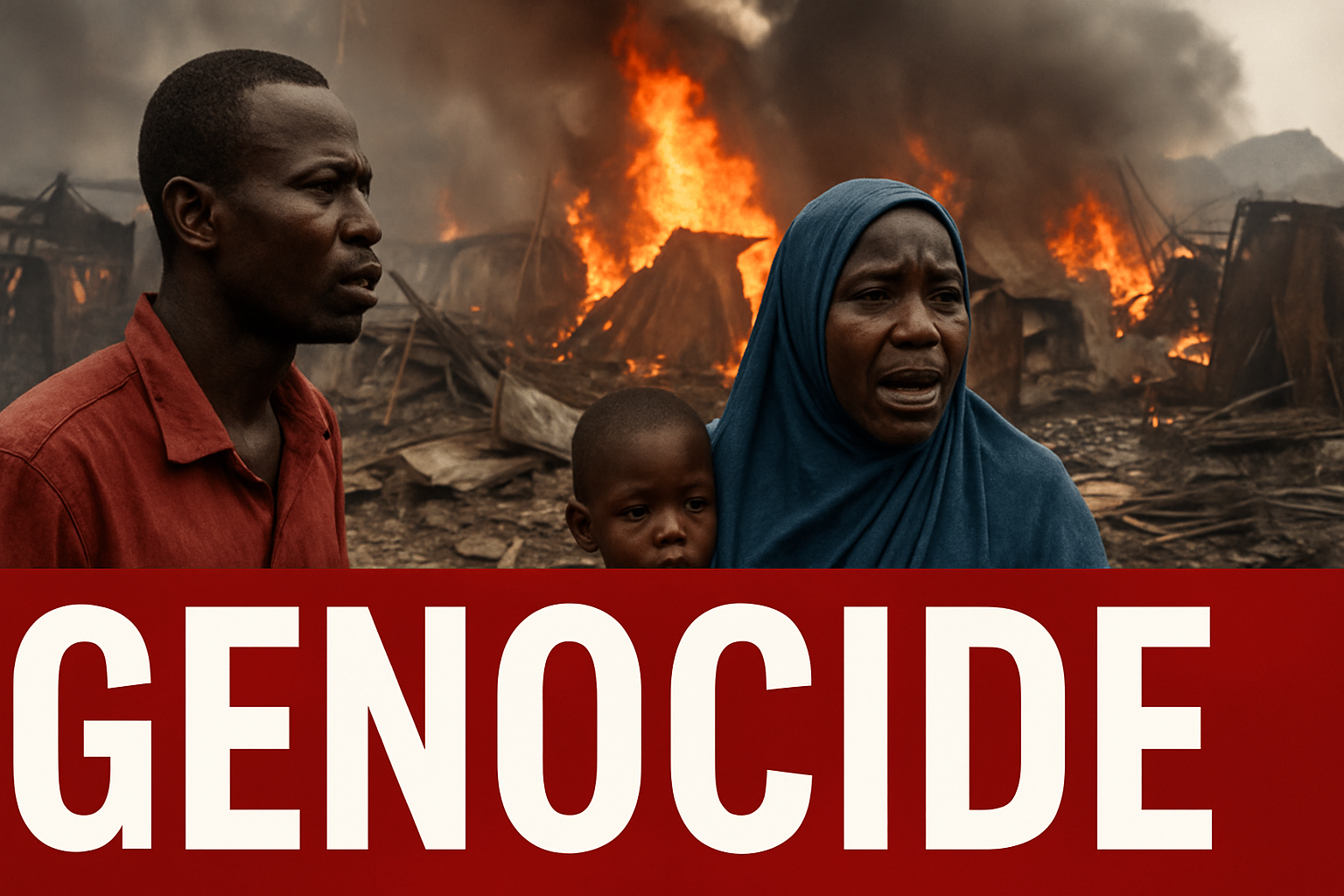
The debate over whether Nigeria is currently experiencing a “Christian genocide” has moved from sermons and social media into international diplomacy, with dramatic consequences. In recent weeks the phrase has been used by U.S. politicians and media personalities, and even prompted public statements and threats from figures outside Nigeria. The Nigerian government has forcefully rejected the label “state-backed religious persecution,” arguing the country’s constitution and laws do not permit such behaviour. That official denial, however, does not erase the very real suffering of communities across large swathes of the country, nor does it diminish the urgent need to explain why violence is spiralling and who — or what — is responsible.
Three interlocking truths must shape the conversation. First: Nigerians of many faiths are being killed, kidnapped and displaced. Second: The forms and drivers of violence are complex — ranging from jihadist insurgency in the northeast, to banditry and kidnappings in the northwest, to communal clashes and herder–farmer violence in the middle belt and parts of the south. Third: while some attacks are clearly directed against Christians and Christian communities, others have targeted Muslims; the pattern is not one of straightforward, centrally planned ethnic or religious cleansing. Understanding these distinctions matters — both for moral clarity and for designing workable policy responses.
Why the debate escalated The term “genocide” carries a specific legal meaning and a powerful moral charge. Its use has a way of simplifying complex, geographically patchy violence into a single narrative. That simplification explains some of the recent international headlines and heated political posturing. Influential voices abroad have labeled the killings a “Christian genocide,” pointing to horrific incidents — mass killings in villages, churches attacked, priests and nuns abducted — and to compelling human stories of loss that demand justice. At the same time, independent reporting and analysts caution against broad-brush labels that can misrepresent distribution of victims and the mechanics of violence across Nigeria’s regions.
A different frame: violence against Nigerians, enabled by bad and corrupt leadership An alternative framing — and the one I argue is more useful — positions these tragedies not principally as a religious genocide, but as the downstream consequence of a failing state: a failure of security, governance and accountability that leaves ordinary Nigerians exposed to predation. In this view, violence is being driven by a toxic mix of factors where corruption, impunity and policy failure are central:
• Security institutions are overstretched, under-resourced and often poorly led. Militias, bandit groups, and insurgent organisations exploit gaps in intelligence, funding and local trust to move, recruit and strike.
• Corruption and local collusion can blunt effective responses. Where law enforcement is captured or compromised, armed groups can operate with impunity — and victims have little hope of redress.
• Competition over land and resources — exacerbated by climate stress, population growth and unregulated grazing routes — precipitates communal violence that then takes on religious overtones because of the faith profile of many communities.
• Weak rule of law and slow or selective justice incentivise vigilante responses and cycles of reprisal, further fracturing communities.
Viewed this way, the violence is properly described as an assault on Nigerians — on the social contract between ruler and ruled — rather than solely as a campaign by one religion against another. That distinction matters because the solutions are institutional and political: reform the security services, dismantle corrupt patronage networks, enforce the law impartially, and address the economic drivers that make communities vulnerable.
Evidence and consequences International faith-based NGOs and rights groups have documented devastating attacks on Christian communities — destroyed churches, kidnapped clergy and mass killings in certain states. Those facts are undeniable and must be confronted with urgency. At the same time, reporting from major outlets and analysts shows that Muslims are also heavily victimised by Boko Haram and related insurgent activity, especially in the northeast; casualty maps and timelines reveal that geography and group dynamics, not purely faith, often determine who suffers most in any particular episode. These mixed findings help explain why some Nigerian leaders and institutions bristle at the genocide label: it flattens complexity and can invite external pressure that’s more performative than helpful.
What needs to change — practical reforms, not slogans If the aim is to stop mass slaughter, ransom kidnappings, and the destruction of communities, then rhetorical escalation must be matched with concrete reforms at home and constructive, sustained international cooperation. Key priorities should include:
1. Security reform with accountability. Professionalise and equip security forces, but crucially tie funding and cooperation to measurable improvements in restraint, transparency and human-rights compliance. Establish independent, rapid investigative teams for mass atrocities.
2. Tackle corruption across institutions. Corruption corrodes capacity. Strengthening audit institutions, protecting whistleblowers, and prosecuting corrupt actors who enable violence should be non-negotiable.
3. Community-based prevention and reconciliation. Support local peace committees, land-use mediation, and trauma healing — solutions that reduce recruitment into armed groups and help neighbours rebuild trust.
4. Land and livestock policy. Implement and enforce clear, locally tailored grazing laws and migration corridors, supported by incentives for sedentarisation and agricultural productivity where appropriate.
5. Economic inclusion and resilience. Invest in livelihoods, education and infrastructure in conflict-prone areas so that youth have alternatives to joining armed groups.
6. International cooperation that respects sovereignty but demands results. External actors can help with intelligence, training, and humanitarian aid — but must prioritise durable outcomes over headline-grabbing interventions.
Conclusion The human tragedies unfolding across Nigeria — the burned villages, the kidnapped clergy, the displaced families — deserve clarity, compassion and decisive action. Labeling the crisis as a “Christian genocide” captures the intensity of grief and moral outrage felt by many, but it risks flattening a more complicated reality and invites polarising responses that do little to stop killing on the ground. A more useful diagnosis locates the problem in a weakened state, captured by corruption and deficient governance, whose collapse into fragmentation is what allows mass violence to flourish. If Nigerians and the international community are serious about ending these cycles of violence, they must move beyond slogans and build institutions that protect every citizen — Christian and Muslim alike. Only then will the security, dignity and rights of all Nigerians be restored.