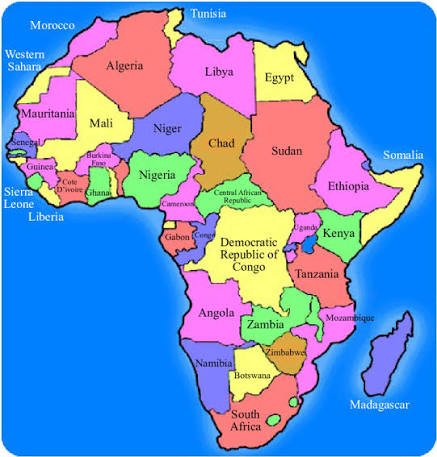
Across Africa, one of the most persistent challenges to democratic progress and sustainable development is the recurrent election — or re-election — of aged leaders into government positions. While the rest of the world advances through innovation, technology, and dynamic leadership, many African nations remain stuck under the control of aging political elites who have failed to adapt to the realities of the modern era. This phenomenon, exemplified by Cameroon’s long-serving president, Paul Biya, reflects a broader systemic failure of African democracy to renew itself and embrace youthful leadership capable of driving change.
The Legacy of Paul Biya: A Symbol of Africa’s Leadership Stagnation
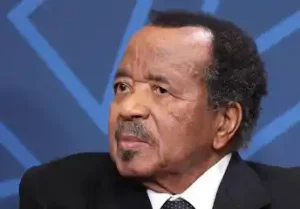
President Paul Biya of Cameroon, born in 1933, has ruled his country since 1982, making him one of the world’s longest-serving leaders. Now in his 90s, Biya continues to wield power in a nation grappling with poverty, corruption, unemployment, and civil unrest. His near four-decade rule symbolizes the deep-rooted political stagnation that has characterized much of Africa’s post-independence leadership.
Under Biya’s leadership, Cameroon has seen:
-Worsening youth unemployment, despite a highly educated population.
-Entrenched corruption, particularly in the civil service and defense sectors.
-A lack of digital transformation, keeping the economy dependent on outdated systems.
-Civil conflict, particularly the Anglophone crisis, which has displaced thousands and crippled local economies.
Biya’s continued grip on power highlights a system where elections are ceremonial, institutions are weak, and political renewal is almost impossible — conditions that are replicated across many African states.
A Continental Pattern: Africa’s Aged Political Class
Cameroon’s situation mirrors that of several African nations. Leaders such as:
*Yoweri Museveni of Uganda (in power since 1986),
*Teodoro Obiang Nguema Mbasogo of Equatorial Guinea (since 1979), and
*Denis Sassou Nguesso of Congo-Brazzaville (since 1979),
illustrate a pattern of political recycling that leaves little room for generational transition. This gerontocratic system — rule by the elderly — has created a political environment resistant to reform, innovation, and the infusion of new ideas.
In contrast, many developed and emerging economies have seen the rise of younger leaders who better understand global trends such as artificial intelligence, climate change, and digital governance. For Africa, however, leadership often remains a retirement home for politicians who came to power in the Cold War era.
Consequences of Aging Leadership
1. Disconnect from Modern Realities:
Many aged leaders lack familiarity with the digital age, technology-driven governance, and modern economic systems. This gap prevents African nations from adapting to the global knowledge economy.
2. Suppression of Youth Potential:
With Africa’s population being over 60% under the age of 25, the exclusion of young people from governance is both ironic and dangerous. It creates frustration, unemployment, and a cycle of migration and brain drain.
3. Corruption and Nepotism:
Longevity in office breeds impunity. With no fear of losing power, aged leaders often manipulate electoral systems, suppress opposition, and enrich their inner circles at the expense of citizens.
4. Weak Institutions:
Rather than building independent institutions, these leaders personalize governance, ensuring loyalty to themselves instead of the constitution. This undermines democracy and accountability.
The Need to Upgrade Africa’s Democracy
For Africa to align with the 21st century, there must be a deliberate democratic upgrade — a renewal of governance systems that promote transparency, inclusiveness, and youth participation. This can be achieved through:
*Constitutional Reforms: Introducing age and term limits to prevent life presidencies and encourage generational rotation of leadership.
*Youth Empowerment Programs: Establishing leadership academies, political mentorship schemes, and party reforms that prioritize youth inclusion.
*Technological Integration: Encouraging e-governance, digital voting systems, and accountability platforms to make leadership more transparent.
*Civic Education: Building political awareness among the youth to challenge complacency and political apathy.
The Way Forward: Youth as the Engine of Transformation
Africa’s future lies in the energy, innovation, and creativity of its young people. From tech entrepreneurs in Nigeria to climate activists in Kenya and innovators in South Africa, the continent’s youth have proven capable of transforming societies when given the chance. What they lack is access to political power — a space still dominated by a generation reluctant to pass the baton.
If the continent must move forward, African countries need to redefine leadership as service, not entitlement, and create systems that favor competence, integrity, and innovation over age and longevity.
Conclusion
The recurring election of aged leaders, such as Paul Biya in Cameroon, represents not just a national crisis but a continental warning. Africa cannot compete globally with leaders who are disconnected from the realities of the 21st century. True progress demands a youth-driven democratic rebirth, one that empowers the new generation to take the helm and steer the continent toward technological growth, global relevance, and social justice.
Until this transformation occurs, Africa risks remaining a continent rich in potential but poor in progress — trapped not by fate, but by the unwillingness to let go of the past.