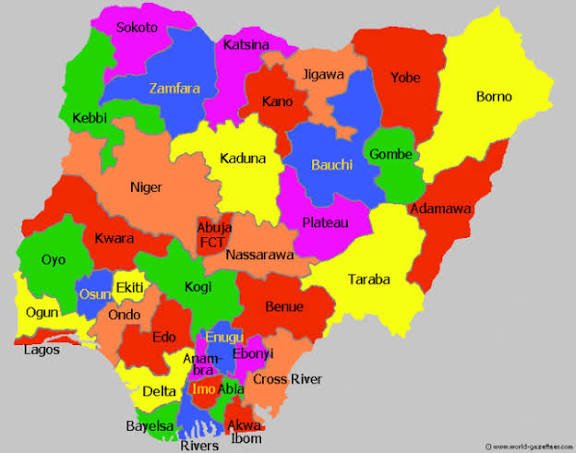
A fresh, fast-moving wave of defections from the country’s main opposition parties — notably the Peoples Democratic Party (PDP), the Labour Party (LP) and smaller outfits — into the ruling All Progressives Congress (APC) has reshaped Nigeria’s political map in days, not months. From governors to senators, House of Representatives members and entire state assembly caucuses, the movement has exposed more than party weakness: it signals a scramble for political protection, access to federal resources and a re-ordering of influence ahead of the 2027 cycle.
What happened — at a glance
Multiple PDP governors have crossed to the APC, including high-profile switches this week that left the PDP with far fewer governors than it held earlier this year. Analysts note Enugu Governor Peter Mbah’s jump as particularly consequential.
Bayelsa Governor Douye Diri has also formally dumped the PDP, reportedly taking a chunk of his state’s political structure with him.
Defections have altered the balance in the National Assembly, with recent switches giving the APC a supermajority in the Senate — a threshold with important constitutional and political implications.
Why politicians are jumping ship — the three Cs: Control, Cash, and Cover
1. Control (Power and policy influence). Sitting governors, senators and lawmakers gain more direct influence when aligned with the party that controls the presidency and the federal bureaucracy. For governors, being in the ruling party eases coordination with federal ministers and agencies — which matters for state projects, security responses and appointments. The Enugu mass-move under Governor Mbah — where local structures reportedly shifted en masse — shows how defections can rearrange regional political control overnight.
2. Cash (Access to the “national cake”). Federal allocations, contracts, appointments and discretionary spending flow through ministries and agencies. Being outside the ruling coalition can limit access to patronage networks; being inside often restores them. In a patronage-heavy system, politicians under pressure — whether from state-level unrest, revenue shortfalls or looming re-election fights — view defection as a pathway to secure resources for allies and projects that keep them politically viable. Coverage of recent gubernatorial and assembly-level defections repeatedly highlights the resource logic driving the moves.
3. Cover (Political protection and survival). Alignment with the president’s party can provide a degree of political insurance: smoother relations with security agencies, less likelihood of federal probes or administrative obstacles, and easier negotiation if internal party disputes flare. High-stakes fights — from impeachment threats to intra-state contestations — make political protection an attractive incentive. The speed and scale of recent defections suggest many actors are prioritizing short-term survival over long-term party loyalty.
Institutional consequences: majority math becomes real politics
With the APC approaching or securing the two-thirds threshold in the Senate after recent switches, the ruling party now has leverage on constitutionally sensitive votes — impeachment, constitutional amendments and other majorities that were previously harder to assemble. That numerical reality transforms defections from symbolic gains into concrete power: lawmaking, confirmations and oversight processes all shift in practice when the majority is that large. Analysts and media reports have flagged the Senate’s new composition as a turning point.
What this means for the opposition — fragmentation and message problems
The opposition’s losses are both structural and reputational. Losing governors and prominent legislators does more than subtract votes; it fractures party machinery, weakens fundraising and damages the narrative of momentum needed to persuade voters. The PDP’s public downplaying of the defections — insisting mass support matters more than a few officials — reflects political damage control, but the practical effect of losing state machines is real: candidate recruitment, voter mobilization and local patronage networks are all disrupted.
Regional and electoral implications
*Southeast politics: Observers note the symbolic weight when states or entire local networks pivot; it can signal a re-alignment of regional votes and open the door for the APC to expand in areas previously outside its stronghold. Coverage of defections in the Southeast has made this a focal concern for the PDP and civil society watchers.
*2027 calculus: The APC’s consolidation strengthens the incumbent president’s re-election posture and narrows the opposition’s bargaining chips. Reuters and others reported the party’s early endorsement of President Bola Tinubu for 2027 and his public expectation of further defections — a feedback loop that encourages more switches as actors reposition for the next national contest.
Risks for the APC and for democracy
While defections accelerate APC dominance, they carry risks: internal factionalism as newcomers compete for spoils; voter backlash if switches are perceived as opportunistic; and longer-term institutional hollowing if parties become mere vehicles for patronage rather than platforms for policy. For democratic norms, mass cross-carpeting erodes party accountability — voters who elect representatives on one platform find themselves represented by another within months. That undercuts programmatic politics and blurs policy responsibility.
Bottom line — short term winners, uncertain long-term outcomes
The current defection wave has made the APC the short-term winner: more governors, a tougher legislative majority, and greater control over the levers of the federal state. But this victory is transactional rather than ideological. If the exodus continues to be driven chiefly by resource access and political protection, the long-term consequence may be deeper cynicism among voters, weaker party institutions and a politics that rewards shiftability over convictions. The next two years will show whether these defections translate into sustained governance gains or merely rearrange patronage tables — and whether voters will punish or reward those who changed colours for convenience.